
privacy frosted glass
The Importance of Snap Gauges in Precision Engineering Snap gauges are essential tools in the field of precision engineering, playing a crucial role in ensuring quality and accuracy in manufacturing processes. As businesses strive for perfection in their products, the demand for high-quality measurement tools like snap gauges has steadily increased. This article explores the significance of snap gauges, the manufacturers behind them, and their impact on various industries. Snap gauges are designed to measure the external dimensions of a workpiece. Unlike traditional calipers, which require manual handling and interpretation, snap gauges provide a direct reading, improving efficiency and reducing the likelihood of human error. These tools are particularly valued for their ability to deliver rapid measurements, essential in high-volume production environments where time is money. The Importance of Snap Gauges in Precision Engineering When it comes to snap gauge manufacturers, several key players dominate the market. Companies have invested significantly in research and development to produce innovative measurement solutions. Leading manufacturers focus on quality control, utilizing advanced materials and technologies to ensure the durability and accuracy of their products. Many of these companies also adhere to strict certifications and compliance standards, which are vital for industries with rigorous quality benchmarks. snap gauges manufacturer For instance, renowned manufacturers have embraced technology in their production processes, employing computer numerical control (CNC) systems to achieve the highest levels of precision. Furthermore, they often offer custom solutions tailored to specific customer requirements, reinforcing their commitment to meeting diverse manufacturing needs. This flexibility is particularly beneficial for companies that operate in niche markets or have unique measurement challenges. The impact of snap gauges on productivity cannot be overstated. In a world where tolerance levels are continually tightening, manufacturers need tools that can keep up with the pace of innovation. Snap gauges enable quick checks of parts, reducing the time spent on inspections and allowing for smoother workflow. Consequently, this leads to increased productivity and reduced lead times, providing manufacturers with a competitive edge. Moreover, the advent of digital snap gauges has further transformed the landscape of precision measurement. Digital displays offer enhanced readability, data logging capabilities, and connectivity options, allowing manufacturers to integrate measurement data into their quality control systems seamlessly. This digital shift not only enhances user experience but also paves the way for improved analytics and decision-making processes. In conclusion, snap gauges are vital instruments in the sphere of precision engineering, providing manufacturers with reliable, efficient, and accurate tools for quality assurance. The expertise of snap gauge manufacturers ensures that these tools evolve alongside industry demands, incorporating advancements in technology to meet the needs of modern manufacturing. As industries continue to push for greater accuracy and efficiency, the role of snap gauges will remain pivotal in fostering innovation and excellence in production processes. Embracing these tools is not just a choice but a necessity for any company aiming to succeed in today’s competitive landscape.
about
privacy frosted glass
Understanding the 1 Way Check Valve A Vital Component in Fluid Control Systems A 1 way check valve, also known as a unidirectional valve or non-return valve, plays a crucial role in various fluid control systems. This ingeniously designed component is primarily used to allow fluid flow in one direction while preventing it from flowing back in the opposite direction. Its functionality is critical for maintaining system integrity and preventing backflow, which can lead to contamination, equipment damage, or even system failure. The '1 way' in the term refers to the valve's single port design, meaning it has one inlet and one outlet. Unlike a two-way valve that allows fluid to flow in both directions, a 1 way check valve ensures a unidirectional flow. The valve opens when the fluid pressure exceeds a certain threshold, allowing the fluid to pass through. Once the flow direction reverses, the valve automatically closes, thereby preventing backflow. The operation of a 1 way check valve is based on a simple yet effective mechanism. It typically consists of a valve body, a spring, and a disc or a ball. When fluid flows in the intended direction, it pushes the disc or ball against the force of the spring, opening the valve. Conversely, when the flow attempts to reverse, the spring's force keeps the valve closed, stopping the fluid from flowing back Conversely, when the flow attempts to reverse, the spring's force keeps the valve closed, stopping the fluid from flowing back Conversely, when the flow attempts to reverse, the spring's force keeps the valve closed, stopping the fluid from flowing back Conversely, when the flow attempts to reverse, the spring's force keeps the valve closed, stopping the fluid from flowing back 1 way check valve . These valves find applications in a myriad of industries, including oil and gas, chemical processing, water treatment, and pharmaceuticals. They are often installed in pumps to prevent pump cavitation, in pipelines to protect against backpressure, and in pressure vessels to maintain system pressure. One of the key advantages of the 1 way check valve is its simplicity. Its straightforward design makes it less prone to malfunction and easier to maintain compared to more complex valve designs. However, it is essential to choose the right type of check valve based on the specific application requirements, such as fluid properties, pressure ratings, and flow rates. In conclusion, the 1 way check valve is an indispensable element in fluid control systems, ensuring the safe and efficient flow of fluids. Its ability to prevent backflow not only safeguards the system but also contributes to process reliability and longevity. Despite its seemingly simple function, the role it plays in maintaining system integrity cannot be overstated. As technology advances, we can expect further innovation in the design and materials of these valves, enhancing their performance and suitability for diverse industrial applications.
-

High quality industrial productsagement

High quality industrial products
View Details -

Meet the diverse needs of customers

Meet the diverse needs of customers
View Details -

Strict quality control

Strict quality control
View Details -

Top raw materials

Top raw materials
View Details -

Trusted supplier

Trusted supplier
View Details
Our application


news and information
Water Pressure Regulation Using Check Valves for Efficient System Performance
Water Pressure Check Valves Importance, Functionality, and Maintenance Water pressure check valves a

water flow control valve types
The innovative technology behind water control valves has dramatically revolutionized the way indust
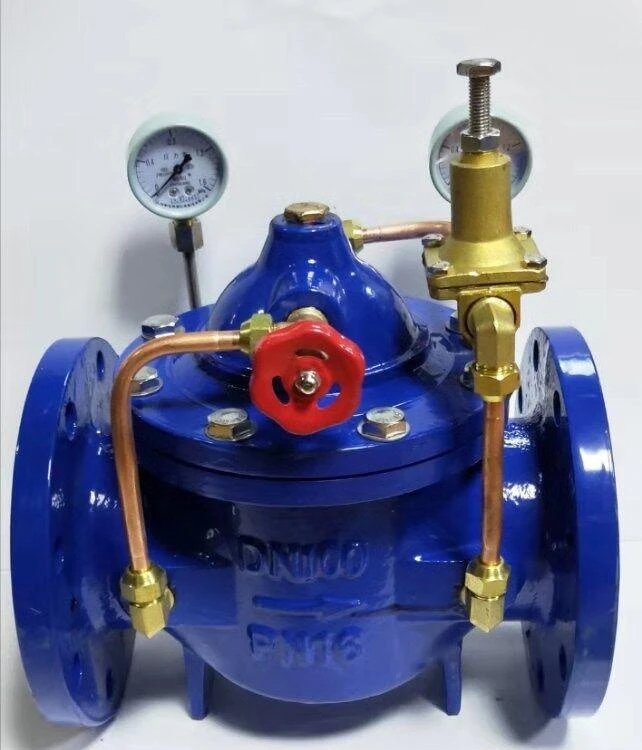
water line check valve
Understanding the Importance of Water Line Check Valves Water line check valves play a crucial role
 English